Concierge Cardiology: A Better Way to Practice and Care

Cardiologists across the country have been converting their practices to the concierge business model after seeing the many benefits it offers. Switching from the traditional structure beholden to insurance providers allows physicians to better serve their patients without spending too much time on tedious paperwork.

If you’re considering the transformation, turn to Specialdocs Consultants. We know more about transitioning to concierge medicine in cardiology than just about anyone. We will show you the way, no matter how you decide to go about it.

How Concierge Cardiology Differs From Traditional Care

Concierge cardiology primarily operates on a membership-based model focused on accessibility, prevention, and individualized care. Unlike traditional cardiology practices that often manage very large patient volumes, concierge cardiologists work with smaller patient panels, allowing for longer appointments and more direct communication. Patients get faster scheduling, extended consultations, and easier access to their physician via phone, text, or telehealth.

This membership model also places greater emphasis on preventative heart care, lifestyle management, and long-term cardiovascular planning, rather than solely focusing on treating acute symptoms during brief office visits. With fewer administrative and insurance-related pressures, physicians can spend more time reviewing risk factors, monitoring chronic conditions, and developing highly personalized treatment strategies.

How a Concierge Setup Can Give You the Edge

Because the transition enables increased career satisfaction, practice revenue, and patient advocacy, cardiologists are often among the most successful concierge physicians. Concierge cardiology not only gives you more time with your patients but also frees you from the limitations of the traditional healthcare model.

Although improving accessibility and convenience is the main idea behind concierge medicine, there are countless reasons to transition to a membership-based model. Choosing to transform a cardiology practice provides just as many advantages for the doctor as it does for the patient, including:

  • Improved Doctor-Patient Relationships: An individualized, patient-centric approach allows for more face-to-face interaction with patients. As a result, close relationships are formed and consistently maintained, ensuring a more secure and trustworthy experience.
  • Improved Work-Life Balance: With fewer patients to see each day, your practice can be less crowded, reducing your overall time in the office. Plus, you can spend less time filling out insurance paperwork and more time dedicated to patient care.
  • Better Care and Career Satisfaction: Thanks to longer appointment times and in-depth consultations, physicians can learn more about the symptoms, medical history, and unique needs of their patients that are overlooked most of the time. This leads to more effective outcomes and increased satisfaction for doctors and patients alike.

At Specialdocs Consultants, we make it even easier by taking the marketing, billing, and compliance concerns off your plate, so you can focus entirely on helping your patients.

“Specialdocs is really different. They have approaches that are individualized to the needs of that doctor and their practice.”

John Levinson, MD, PhD
Cardiologist
Boston, Massachusetts

Our Concierge Cardiology Transition Services

Our concierge cardiology transition services help physicians move away from high-volume care models toward a more personalized and sustainable practice structure. We provide support with operational planning, patient communication, financial strategy, and implementation while allowing cardiologists to maintain control over their practice, clinical approach, and long-term patient relationships.

Feasibility Assessment & Market Analysis

Assessing viability helps determine whether a cardiology practice can successfully transition to a concierge model. The process evaluates patient demographics, financial sustainability, conversion potential, and regulatory considerations. An in-depth market analysis also assists physicians in understanding local demand, pricing strategies, and the stability of long-term practice before implementation begins.

Transition Planning & Implementation

Transitioning a cardiology practice to a concierge model requires a careful understanding of financial, operational, and patient communication. The process normally includes practice analysis, membership structure development, compliance review, and workflow adjustments. A step-by-step transition process helps maintain continuity of care while enhancing long-term practice stability and physician autonomy.

Membership Management & Billing

Membership management and billing services help concierge cardiology practices operate more efficiently by reducing administrative workload. Support includes membership enrollment, recurring billing management, payment processing, and patient communication. Streamlined systems also give physicians better visibility into practice performance while allowing staff to focus more on patient coordination and ongoing cardiovascular care.

Practice Marketing & Patient Outreach

Practice marketing and patient outreach play an important role during a concierge cardiology transition. Effective communication helps patients understand the benefits of the membership model while supporting retention throughout the process. Marketing efforts may also include branding support, educational materials, digital visibility strategies, and ongoing patient engagement designed specifically for cardiovascular care practices.

Regulatory Compliance Support

Regulatory compliance support helps cardiology practices transition to a concierge model while remaining aligned with healthcare laws, privacy requirements, and payer regulations. Guidance may include patient communication protocols, HIPAA compliance, membership agreement review, and insurance contract considerations. Proper oversight reduces legal risk and supports a smoother transition for both physicians and patients.

Practice Growth & Succession Planning

Practice growth and succession planning are important parts of building a sustainable concierge cardiology model. Ongoing support includes operational guidance, patient retention strategies, marketing assistance, and long-term transition planning for retirement or ownership transfer. A structured approach helps physicians strengthen the stability of their practice.

Why Cardiologists Choose Specialdocs

Today, many cardiologists have reached a point where traditional practice models feel unsustainable and even short-term. Short appointments, growing administrative demands, and limited time for preventative care can make it difficult to maintain meaningful patient relationships. Specialdocs helps physicians transition to a concierge cardiology practice model that enables a slower, more personalized approach to cardiovascular care.

Doctors can spend more time discussing long-term heart health, risk factors, and treatment planning, rather than moving quickly from one appointment to the next. Another reason cardiologists choose Specialdocs is the model’s flexibility. Physicians retain control over their practices, maintain their own identity, and receive operational support without giving up clinical independence or ownership.

A Tailored Approach for Every Cardiology Practice

Depending on your situation and personal preferences, you may have different expectations or requirements when adopting the concierge model. For instance, there may be certain processes you’d like to maintain as you transition, or brand-new avenues you’d like to explore. Either way, we work with cardiologists to find the perfect niche that best serves your needs and the way you like to deliver patient care.

When transitioning to a concierge cardiology practice, our main goal is to provide a simple, personal approach to enhance your internal operations while keeping the doctor front and center.

Our Process for Transitioning to Concierge Cardiology

Our concierge cardiology transition process is designed to help physicians gradually transition from traditional practice models to a more personalized, membership-based structure. The process includes practice evaluation, financial forecasting, patient communication planning, operational support, and implementation guidance, all structured to protect patient relationships while maintaining long-term practice stability and physician independence.

Step 1: Practice Evaluation

Every concierge transition begins with understanding if the model fits the practice. The evaluation phase closely examines information such as patient demographics, financial goals, daily workflows, and long-term expectations. It also gives physicians a chance to discuss any concerns openly before making any major operational or structural changes.

Step 2: Transition Strategy Development

Once the initial evaluation is complete, a customized transition strategy is developed to align with the physician’s goals, patient base, and practice structure. This stage usually covers financial planning, membership design, patient communication, operational adjustments, and staff preparation to help the transition feel organized, realistic, and manageable over time.

Step 3: Patient Communication Planning

Clear communication is one of the most important factors of a concierge transition. Patients require time to understand why the practice is changing and what the new model actually offers them. Thoughtful messaging, realistic timelines, and personalized outreach can make the transition feel far more comfortable and transparent for everyone involved.

Step 4: Membership & Operations Setup

Setting up the membership structure and day-to-day operations is where the transition starts becoming practical and more understandable. This stage usually involves staff coordination, billing setup, workflow planning, patient onboarding systems, and communication materials. The goal is to create a process that feels smooth for both the physician and existing patients.

Step 5: Launch & Ongoing Support

The support does not stop once the concierge practice officially launches. Ongoing guidance helps physicians manage patient communication, membership operations, workflow adjustments, and long-term growth. Having continued operational support in place can make the transition feel far less overwhelming during the first several months of the new model.

The Patient Benefits of Concierge Cardiology

Switching to the concierge model of care can also have a profound impact on your patients’ well-being. With fewer appointments each day, your patients should be able to see you the same day or the next day for urgent concerns, providing greater convenience and peace of mind. Because you can spend more time with each patient face-to-face, you’ll also have more time to address complex cardiovascular conditions and advocate for preventative strategies.

When they work with a concierge cardiologist, many patients report greater satisfaction. That’s because they know their specialist is more accessible and can provide in-depth care that goes beyond the rushed interactions common in the standard model of care. Concierge cardiology helps improve patient retention and loyalty by providing higher-touch, personalized care.

Start Your Concierge Cardiology Journey With Expert Support

When you choose to work with us, you’re partnering with a knowledgeable consultancy that aims not only to make your life easier but also to enhance the level of care that all patients deserve.

Find out how concierge consultants and cardiology work together to set new standards in healthcare. We invite you to schedule a meeting today, and our team will reach out to you to learn more about working together.

Frequently Asked Questions

Concierge cardiology is a membership-based approach to heart care that gives patients more direct access to their cardiologist. Because physicians work with smaller patient panels, appointments tend to be longer and less rushed. The model also allows more time for preventative care, ongoing monitoring, and personalized cardiovascular treatment planning.

Yes, concierge cardiology can be a good fit if you want more direct access to your physician, longer appointments, and a stronger focus on prevention rather than reactive care. Many patients choose this model when managing ongoing heart concerns, multiple risk factors, or busy schedules that make faster communication and scheduling especially valuable.

In many concierge cardiology practices, patients have direct access to their physician outside regular office hours, including nights and weekends. Availability can vary by practice, but the model is generally designed to improve communication and responsiveness. For severe symptoms such as chest pain or breathing difficulty, emergency medical care can be sought immediately.

A concierge cardiology membership fee often covers better access to the physician, longer appointments, faster scheduling, and more personalized heart care. Many cardiology practices also include direct communication through phone or email. This also includes preventative wellness planning and ongoing coordination for chronic cardiovascular conditions that may require closer long-term monitoring.

Most cardiology practices take somewhere between 6 and 12 months to complete a concierge transition. The timeline depends on factors like patient communication, legal preparation, operational setup, and membership enrollment. A gradual rollout usually works best, giving physicians enough time to manage the change without disrupting patient relationships or day-to-day care.

During and after the transition process, we provide a wide range of services, including membership management, financial processing, ongoing regulatory review, practice marketing, and practice-growth support.
Explore More Resources to Learn How Specialdocs Works
Specialdocs resource guide graphic

Why Physicians Choose Specialdocs
Specialdocs provides a unique approach and support for concierge medicine practices. Here’s why physicians across the country are partnering with Specialdocs to create and grow their concierge medicine practices.

Client Stories
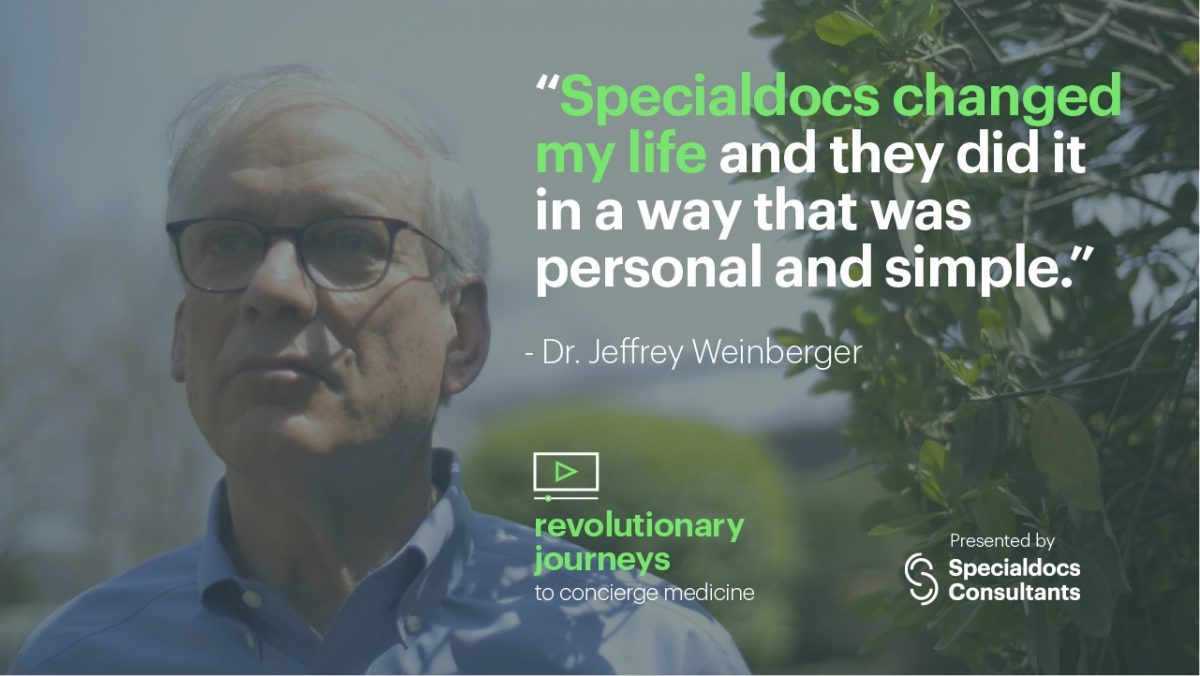
Don’t just take it from us. Watch our clients describe the continuing challenges of the traditional practice model and how Specialdocs helped them make a successful transition to concierge medicine.

Meet Specialdocs Consultants
Since 2002, we’re the concierge medicine consulting company that cares about the success, health and happiness of our physicians and their patients. Learn more about who we are.